
What a Blown-In Garage Door Actually Costs You
Skip this check one more season and you're gambling with more than a dented panel. When a garage door fails under wind pressure, it doesn't just buckle quietly. Panels can rip off the tracks, the opener rail can bend, and in the worst cases the whole door blows inward, taking drywall, stored belongings, or even a section of roof structure with it. National repair ranges for storm-damaged doors run anywhere from a few hundred dollars for a track and roller repair up to several thousand for a full door and opener replacement, and that's before you count the water damage from rain pouring through an open bay or the scramble to find emergency board-up help. Compare that to an afternoon spent inspecting hardware now, before the next line of fall storms rolls through the Fox Valley.
Why the Garage Door Is Your Home's Weakest Wall
Every other exterior wall on your house is a solid, continuous structure. Your garage door is a moving panel held in place by springs, tracks, rollers, and a handful of hinges and fasteners. It's also usually the single largest opening in the home's envelope. When straight-line winds or a sudden gust front hit a house, pressure builds on the windward side and the garage door takes a direct, concentrated load that a brick or siding wall simply doesn't experience the same way.
If that door fails, the pressure doesn't stop there. Wind rushing into the garage can push upward on the roof structure from underneath, which is why building codes in tornado- and high-wind-prone regions increasingly call out garage doors specifically. A door that looks fine on a calm day can still be your home's most exposed point once sustained winds climb into the 50-60 mph range that fall storm systems in this part of Illinois regularly produce.
Signs Your Door Isn't Ready for High Wind
- Rollers and hinges with visible wear: rust, flat spots, or looseness mean the door can rack out of alignment under lateral pressure instead of flexing and returning to shape.
- Thin or unbraced panel sections: older steel doors, especially single-layer ones without horizontal struts, flex more and are more likely to buckle in gusts.
- Worn weatherstripping and bottom seal: gaps let wind-driven rain push past the seal, which matters a lot with the heavy, humid downpours common here in late summer and fall.
- Track bolts and brackets that have loosened over time: big seasonal temperature swings between humid summers and freezing winters cause repeated expansion and contraction that can work fasteners loose.
- An opener with no battery backup: wind storms in this area frequently knock out power, and a dead opener with no manual release you can find in the dark is its own emergency.
Steps to Brace Your Door Before the Next Storm
1. Check and tighten all hardware
Walk the full perimeter of the door and run a wrench over every visible bolt on the tracks, hinges, and roller brackets. Loose hardware is the single easiest thing to fix and one of the biggest contributors to wind-related failures.
2. Inspect the springs and cables
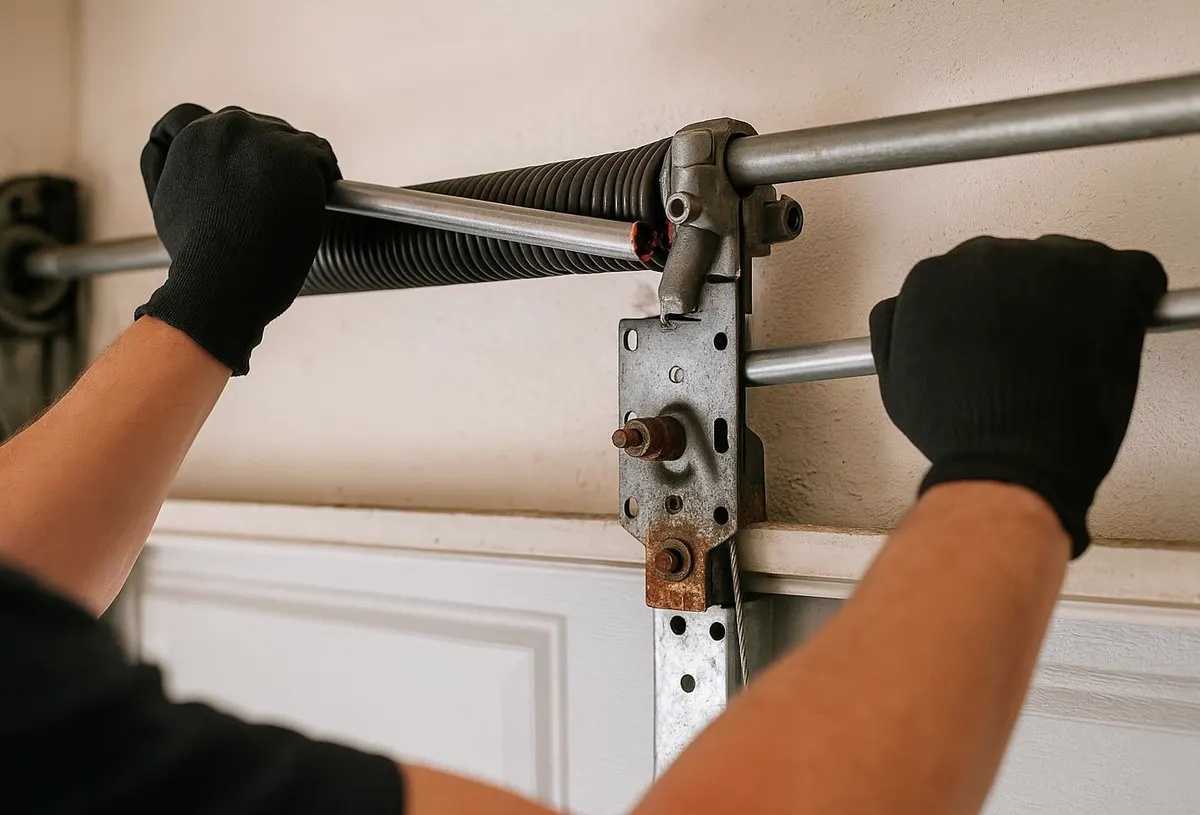
Springs under tension are what let the door resist wind load without the opener motor bearing all the weight. Look for gaps in the coil, rust, or visible stretching. Cables should be free of fraying. This is not a DIY repair area — torsion springs store enough energy to cause serious injury, so if anything looks off, it's a call for a professional spring replacement rather than a fix-it-yourself job.
3. Add or verify wind bracing
Many standard residential doors can be retrofitted with horizontal struts that stiffen the panels against lateral pressure. If your door was installed years ago without this, it's worth asking whether your current door can be reinforced or whether a newer, wind-rated installation makes more sense for the long run.
4. Reseal the weatherstripping
Replace cracked or compressed seals along the bottom and sides. A tight seal does double duty here: it keeps wind-driven rain out during fall storms and keeps cold air out once winter sets in.
5. Clear the approach
Trim back any tree branches hanging over the driveway or close to the door. Fall winds bring down limbs and debris, and a branch strike on a door panel or the opener rail can cause damage just as easily as the wind itself.
6. Test the manual release and backup power
Know where the emergency release cord is and make sure it works. If your opener doesn't have a battery backup, consider adding one — losing power during a storm shouldn't mean losing the ability to open or secure your garage.
When to Call Geneva Garage Door Pro
If you've found worn rollers, a spring that looks stretched or uneven, hardware you can't get fully tight, or a door that shudders noticeably in gusty wind, it's time to get a technician out rather than keep patching it yourself. Our garage door maintenance visits cover exactly this kind of pre-storm check: hardware tightening, spring and cable inspection, weatherstripping replacement, and an honest assessment of whether bracing or a full spring replacement is the right call. And if a storm does catch you off guard — a door that won't close, a bent track, or a panel damaged by wind or debris — our emergency garage door service is built for exactly that situation, day or night.
Don't wait for the next wind advisory to find out your door isn't ready. Call Geneva Garage Door Pro today and get your garage door storm-ready before the next Fox Valley front moves through.