
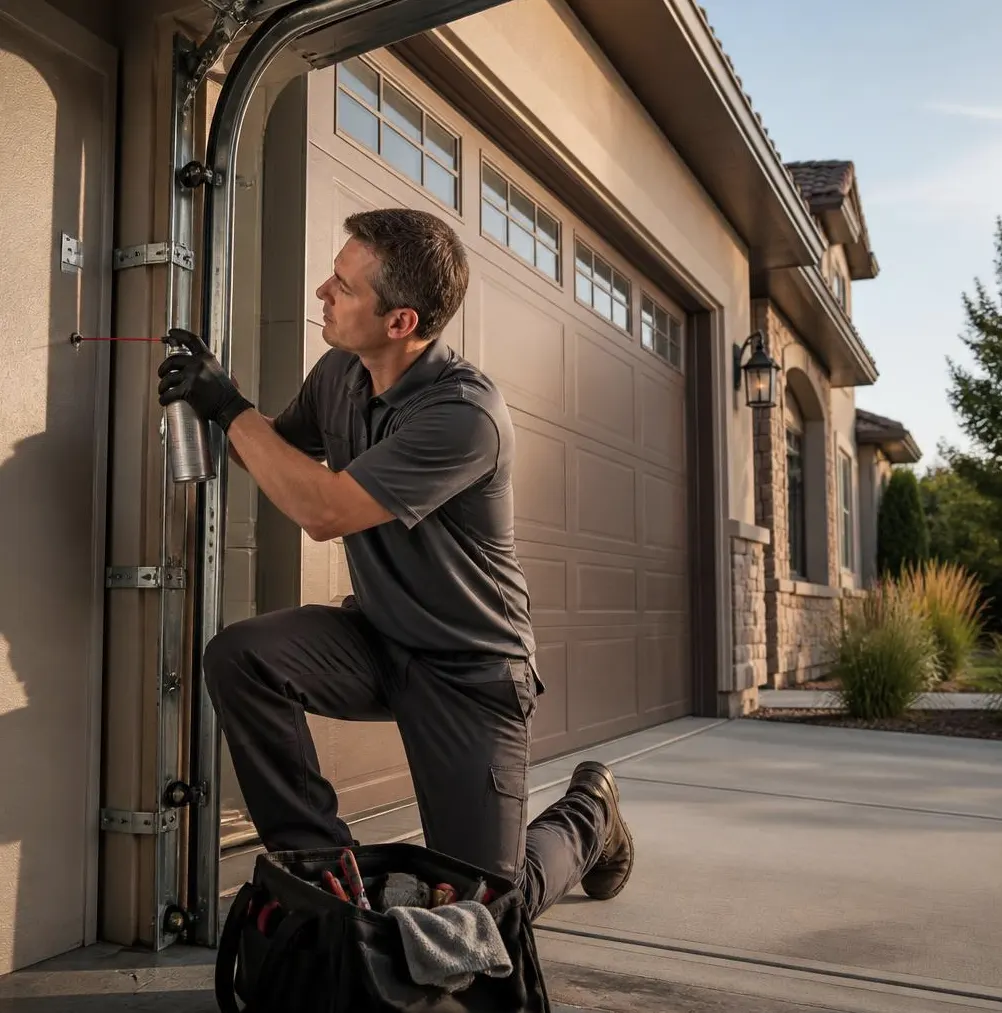
The Real Cost of Ignoring This Before the Next Outage
Fox Valley winters bring ice-coated lines, heavy wet snow, and the kind of cold snaps that push the local utility grid hard. When the power drops, most homeowners discover two things at once: their garage door opener is dead, and they have no idea how to get the door up without it. That usually leads to one of two bad outcomes. Either the car stays trapped inside until the lights come back on, or someone tries to force the door open against a motor that isn't moving, which can bend a track, snap a cable, or strain a spring that's already stiff from the cold. Spend five minutes learning this process now, and you skip the mid-winter repair call and the frustration of standing in your driveway at 6 a.m. with nowhere to go.
Tools You Need (Keep Them Near the Door)
- Step stool or short ladder, tall enough to comfortably reach the trolley release cord
- Flashlight or headlamp, since outages rarely happen in good light
- Work gloves, especially in winter when metal hardware is cold and tracks can have ice or road salt residue on them
- Your opener's model number or manual, so you reconnect the trolley correctly afterward
How to Open the Garage Door Manually
Every modern opener has a manual release, usually a red cord hanging from a mechanism on the rail above the door (the trolley). This disconnects the door from the motor so you can move it by hand.
- If the door is already closed, that's the easiest starting position. If it's partway open or stuck, note where it is before you touch anything.
- Locate the red release cord and pull it straight down and toward the back of the opener rail. You'll hear or feel a click as the trolley disconnects from the drive carriage.
- Grip the door by its handle or bottom edge with both hands, bend your knees, and lift. Insulated steel doors common on Geneva-area homes are heavier than older single-layer doors, so don't try to muscle it with your back.
- Raise the door until it's fully open and locks into the tracks' upper curve. If it won't stay up on its own, something else is wrong (more on that below), so don't force it further.
- If you need to leave the door open, use a clamp, locking pliers, or the door's own lock bar to keep it from sliding back down the track unexpectedly.
How to Close the Garage Door Manually
- With both hands on the door, lower it slowly and evenly, don't let it drop.
- Make sure it seats fully in the bottom track and, if your door has manual slide locks, engage them for added security while the opener is offline.
- Leave the trolley disconnected until power is restored. Trying to use the wall button or remote while it's unhooked won't do anything but confirm the power's still out.
Re-Engaging the Opener After Power Returns
- Close the door fully by hand before reconnecting anything.
- Pull the release cord toward the opener motor (the opposite direction from how you disconnected it) until the trolley clicks back into the carriage. Check your manual if your model reconnects differently.
- Test the door with your remote or wall button. It should open and close smoothly under motor power.
- Watch how it behaves on that first cycle. If the door doesn't fully close, reverses on its own, or the opener strains and grinds, stop using it and don't keep running the motor against resistance.
What You Can Handle vs. What Needs a Technician
Manually releasing and reconnecting the trolley is safe for any homeowner to do and worth practicing once when there isn't an emergency, so you're not learning it in the dark. But certain symptoms mean the manual release is doing its job while something else is broken, and that's where DIY should stop. If the door feels unusually heavy, drops suddenly instead of lifting smoothly, won't stay open on its own, or you notice a gap or kink in the spring above the door, that's a torsion spring under tension, not something to troubleshoot yourself. Bent track, a door that's off-center in its rails, or cables that look frayed also call for a technician rather than a second attempt at forcing it.
When to Call Geneva Garage Door Pro
If your manual release worked fine but the opener won't reconnect properly once power is back, or the door felt wrong when you lifted it by hand, that's worth a call before the next outage puts you in the same spot again. We handle Spring Replacement when a torsion or extension spring is the real problem behind a heavy or stuck door, and our Garage Door Opener Services cover everything from reprogramming after a power cycle to replacing a motor that's no longer holding its limits correctly. For anything that happens outside normal hours, our Emergency Garage Door Service is built for exactly these situations.
If your garage door gave you trouble the last time the power went out, don't wait for the next ice storm to find out why. Call Geneva Garage Door Pro and we'll get it running right before winter tests it again.