
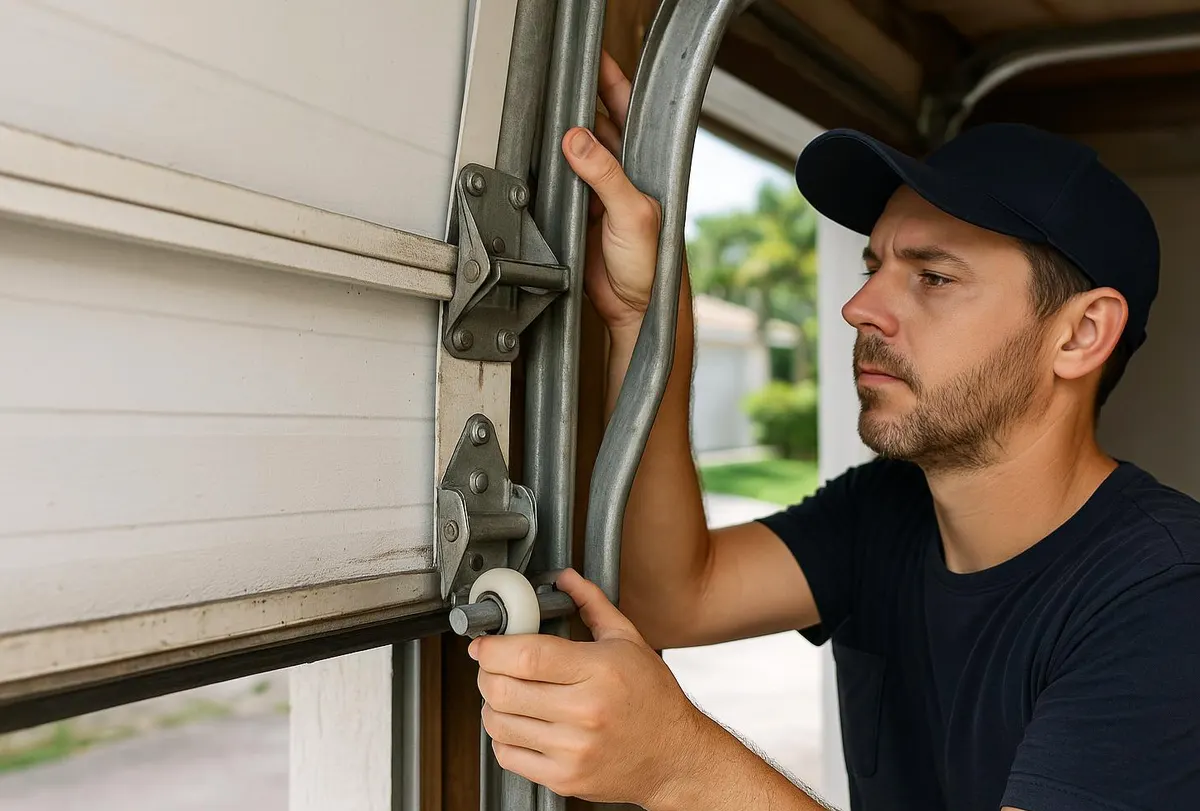
What a Technician Sees on a Typical Fall Call
Right about now, the service calls start to follow a pattern. A homeowner notices the door is suddenly louder, or it hesitates halfway up, or the remote stops working as reliably as it did in September. Nine times out of ten, it's not a new problem — it's an old one that cold weather just finished exposing. A spring that was already fatigued from a few thousand cycles finally gives out the first morning it dips into the 20s. Weatherstripping that was cracked and brittle all summer suddenly lets in a draft you can feel standing in the kitchen. Rollers that were a little dry and noisy in July start grinding once the grease inside them stiffens up. Fall is really the last easy window to catch these things before winter makes them worse, and often more expensive.
Check the Seals Before the First Hard Freeze
The rubber seal along the bottom of the door and the weatherstripping around the sides and top do more work than people expect, especially with the kind of temperature swings this part of Illinois gets between October and January. If that seal is cracked, flattened, or pulling away from the door, cold air pours in and so does meltwater that then refreezes.
- Close the door and check for daylight around the edges, especially at the corners.
- Press a thumb into the bottom seal — if it's hard and doesn't spring back, it's past its useful life.
- Replace worn seals now while it's still easy to work with the material; cold rubber gets stiff and harder to install cleanly.
Give Springs a Hard Look, Not a Quick Glance
Steel contracts in the cold, and a torsion spring that's been slowly weakening all year has less give to work with once temperatures drop. This is why so many spring failures happen on the coldest mornings of the season rather than in July. Watch for a door that feels heavier than usual when lifted manually, a garage door opener that strains or makes a different sound on the way up, or visible gaps in the spring coils.
Springs are also the one component on this list that's genuinely dangerous to adjust or replace yourself — they're wound under enough tension to cause serious injury. If a spring looks worn, this is a case where a quick inspection before winter is worth far more than a 2 a.m. emergency call when it finally snaps under a foot of fresh snow sitting on the door.
Lubricate Rollers, Hinges, and Tracks
Dry metal-on-metal contact gets louder and more sluggish as grease thickens in cold weather. A garage door-specific lithium or silicone-based lubricant on the rollers, hinges, and the track itself (not the opener chain or belt unless the manufacturer says otherwise) keeps things moving smoothly through the coldest months. Do this in fall rather than waiting until January — it's easier to work outside, and the lubricant has a chance to settle in before temperatures bottom out.
Clear and Inspect the Tracks
Winter driveways around here mean road salt, slush, and sand tracked into the garage on tires and boots. That grit works its way into the door tracks and rollers over the season, causing binding, uneven movement, and premature wear. Wipe down the tracks now, check that they're still straight and properly aligned, and keep an eye on buildup through the winter as cars come and go in wet, salty conditions.
Test the Auto-Reverse and Safety Sensors
Cold, damp garages can affect the photo-eye sensors near the bottom of the track — condensation, frost, or a sensor that's been slightly knocked out of alignment over the summer can all cause the door to reverse unexpectedly or refuse to close. Place a piece of scrap wood in the door's path and confirm it reverses properly. Wipe the sensor lenses clean and make sure neither one has drifted out of line with its partner.
Check the Opener's Backup Power and Settings
Winter storms in this area bring power outages along with the ice and wind, and a garage door opener with a battery backup is only useful if that battery actually still holds a charge. Test it now by unplugging the opener and running the door on battery power. It's also worth confirming the force and travel limit settings are correct — a door that's slightly out of adjustment works fine most of the year but can struggle once cold air adds extra resistance.
Insulation Pays Off During Big Temperature Swings
Homes with attached garages lose a surprising amount of heat through an uninsulated door, and the swing from a 60-degree October afternoon to a 15-degree January morning puts real stress on an un-insulated panel. If the garage shares a wall with living space, or if anything stored out there needs to stay above freezing, an insulated door or an insulation kit added to an existing door is a reasonable investment with a payoff every winter going forward.
When to Call Geneva Garage Door Pro
If a spring looks stretched or uneven, if the door is noticeably heavier to lift than it used to be, or if the opener strains, stalls, or reverses without explanation, that's the point to stop troubleshooting and call in a technician rather than wait for a failure during a January cold snap. Our garage door maintenance visits cover exactly the checklist above — seals, springs, tracks, rollers, and opener performance — and if a spring replacement or opener repair is needed, we can usually get it scheduled before the weather turns. We also run emergency garage door service for the mornings when a door won't open and the forecast isn't cooperating.
If you're in Geneva, St. Charles, Batavia, West Chicago, North Aurora, South Elgin, Elburn, or Wheaton and want your garage door checked out before winter settles in, call Geneva Garage Door Pro and we'll get a technician out to take a look.